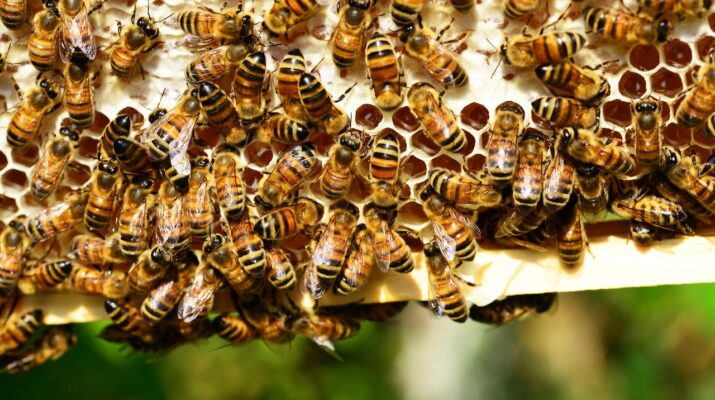
Ever wondered about the real benefit of honey bees? They play a crucial role in pollinating our crops and supporting our ecosystem. Read on as we explain how.
Introduction
Did you know that honey bees are some of the most important creatures on our planet? They play a crucial role in pollinating our crops and flowers, and support our local ecosystem. Without honey bees, our food production would be much lower, resulting in food supply chain issues.
In addition to their importance in agriculture, honey bees also produce honey which is a valuable product for our local economy. There are many other bee-related products that we use every day, such as beeswax wraps, candles and other wax products.
Unfortunately, due to pesticide exposure, diseases and parasites, habitat loss and climate change, global bee populations are falling. So why do honey bees matter and what can we do? Keep reading to find out!
Honey bees are important pollinators
Honey bees are important pollinators, and they play a vital role in our food cycle. Without honey bees, many of the fruits and vegetables that we enjoy would not be able to grow. In addition to their importance in our agriculture and food production, honey bees also support a wide range of local flora and fauna – they pollinate native plants and flowers, providing food for other fauna. They are also an important food source for other predatory insects and animals such as birds.
In fact there are about 20,000 different bee species around the world, all playing a vital role in our ecosystem.

Hive movements for orchard pollination
Honey bees are so important for pollination that many orchardists pay for Hives to be moved into orchards just before the trees bloom. The bees then transfer pollen from the male flowers to the female flowers as they move about. They collect nectar, pollinate the flowers and ensure maximum yield of produce.
This process of honey bee pollination ensures that fruits and vegetables can grow and mature properly, and due to the higher yields, the farmer can make back far more than what they pay the apiarists for hive placement. Common crops that use hive placement include apples, almond and citrus crops.

Other types of pollinators
There are other types of pollinators besides honey bees, such as native bees, flies, beetles, wasps, ants, butterflies, and moths. However, honey bees are the most important type of pollinator for agricultural food crops. This is because worker bees are able to transfer more pollen per visit than any other type of pollinator due to their hairy bodies and furry legs which trap pollen grains effectively. In addition, honey bees are attracted to a wide range of flowers and many plants which means that they can pollinate many different types of crops.

Bee products
Honey bees not only play an important role in our ecosystem, but their products are also valuable to our economy. Honey is a delicious and healthy product that has many uses, and honey production provides employment for many people around the world. In addition to honey, bees also produce other products such as beeswax, royal jelly and propolis which have a wide range of uses.
Honey has antibacterial properties, research suggests it makes a great home remedy for sore throats. Raw honey and processed honey both have health benefits, but raw honey is thought to be superior to processed honey for numerous health benefits – however, raw honey is only suitable for adult human consumption only (not suitable for children) due to the risk of botulism
“The hum of bees is the voice of the garden “
lizabeth Lawrence
Beeswax is a natural wax produced by honey bees. It is used in a wide range of products including cosmetics, beauty products, skincare, candles, polishes, natural food wraps and more. Beeswax is a valuable product that honey bees secrete from their bodies and use to create their honeycomb structure.
Beeswax has many benefits – it is non-toxic, hypoallergenic, long-lasting, and moisture-resistant. It is also a renewable resource, which means that it can be used over and over again without damaging the environment.
Propolis is another product that honey bees produce. Propolis is a sticky substance that young bees use to seal up cracks in their hive. It has many medicinal properties and is often used in natural remedies for sore throats and eye diseases.

Bees are in danger
Unfortunately, honey bees are in danger due to a number of factors including habitat loss, pesticide use, parasites such as varroa mite, and due to extreme weather events and altering of their ecosystems due to climate change.
It is estimated that one third of all the food consumed by us requires pollination from honey bees, so it is important that we do what we can to protect them. There are many things that we can do to help honey bees, such as;
- Planting bee-friendly trees, plants and flowers in our gardens
- Providing a clean (and mosquito free!) water source such as a fishpond with frogs or fish
- Avoiding the use of pesticides.
- Hosting a honey bee colony hive
- Support a conservation reserve program

Conclusion
Honey bees are important pollinators, and bees play a vital role in our food cycle. They also support our local ecosystem by pollinating native plants and flowers, and providing a food source for other insects and animals.
Bees are critical to our ecosystem and economy, but they’re in danger due to habitat loss, pesticide use, and climate change. We can take some basic steps to help safeguard bees, by plant bee-friendly plants, providing clean (and mosquito free) water sources, avoiding the use of pesticides or by even hosting your own beehive!
“The bee is domesticated but not tamed “
William Longgood.
In addition to their ecological importance, honey bees are also valuable to our economy as they produce honey and other products such as beeswax and propolis used for beauty products, health products and for medicinal purposes.. So next time you see a honey bee, take a moment to appreciate all the hard work they do!

We hope that this article has helped you to understand why honey bees are so important, and what we can do to protect them. Do you have any questions or comments? We would love to hear from you! Leave us a comment below or send us an email. Thank you for reading!