
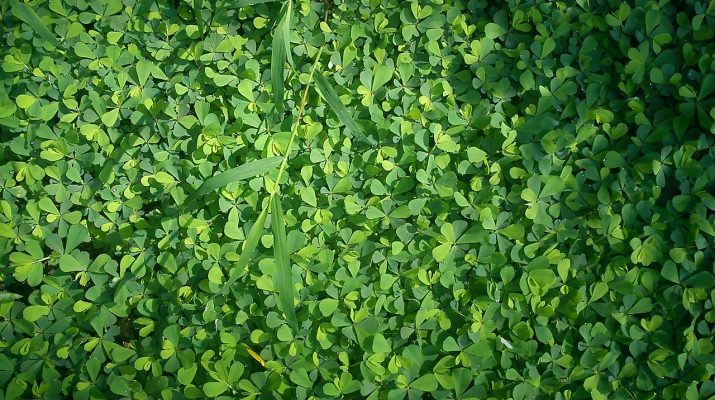
Grass lawns are a feature of most modern gardens due to their lush greenery and soft ‘carpet like’ surface. They are fantastic for recreation (especially barefoot!) but can also prove difficult and expensive to maintain and may lose their lushness in the warmer months.
“The warm green of the grass, sprinkled with flowers of many hues, is a carpet whereon we walk with noiseless tread.“
William Wendt

Grass Lawns
Grass lawns can be stunning, but certainly make you work for it! They are usually a monoculture grass crop which can be difficult and expensive to cultivate and maintain.

Typically, they require a significant amount of water to keep green and lush in the warmer seasons, and need frequent moving and fertilising to keep the lawns in tip top condition.
Other than a grassed playing surface, ground cover to prevent weeds or for aesthetics, your lawn provides little to no benefits to your garden or the environment and can be incredibly ‘hungry and thirsty’ consuming valuable resources which other plants may need.
Clover Lawns
Clover lawns are a great alternative to a conventional monoculture grassed lawn. There are two main specifies of clover that are used for either pure clover lawns or mixed grass-clover lawns. These are;
- Dutch white clover (Trifolium Repens), and;
- Micro-clover

Both specifies of clover are types of perennial legumes, and are used extensively in farming to produce high yields for feed crops.
Clover is exceptionally hardy and has been described as ‘Living mulch’. Clover is used frequently for ground cover in farms, vegetable gardens, orchards and even vineyards where it attracts beneficial insects and microbiome to increase farm production and prevent weeds.
For example, Dutch White clover will flower and is a favourite food source for bees which will then pollinate nearby flowers in vegetable gardens or orchards.
Dutch White clover (Trifolium Repens)
Dutch white clover is the most common type of clover and is best suited to lawns. This hardy clover is well suited for adverse growing conditions and poor soils, where it makes a fantastic ground cover and companion plant.
White clover grows exceptionally well in areas of medium to moderate rainfall and temperate climates. It can cope well with shaded areas and frosts, however extended drought or high temperatures will cause white clover to die back.
Micro-clover
Micro-clover is a smaller type of clover and will naturally grow to a smaller height and require less mowing. Micro-clover will usually become dormant during winter and can turn brown and feel dry to walk on, and because of this it is not grown as often as white clover.
Why Grow a Clover Lawn?
- Clover lawns require less water – staying greener throughout summer with less watering than grass lawns (but they still do need to be watered!)
- Clover lawns require no fertiliser since they can fix their own nitrogen from the air (they are a leguminous plant). This means that it actually creates its own fertiliser and will even feed nearby plants!
- Clover requires less herbicide or weeding, since it will outgrow any weeds with its dense root structure and broad leaves.
- Clover lawns require less mowing – Dutch (white) clover will only grow to approximately 5 inches tall if left, however if mowed it can quickly regrow to form a thick ground cover.
- Clover lawns attract a range of beneficial insects into your garden to help support the ecosystem and remove pests.
The downside to Clover Lawns
Clover lawns aren’t perfect though, so it is important to consider some of the following facts when deciding on whether a clover lawn is for you;
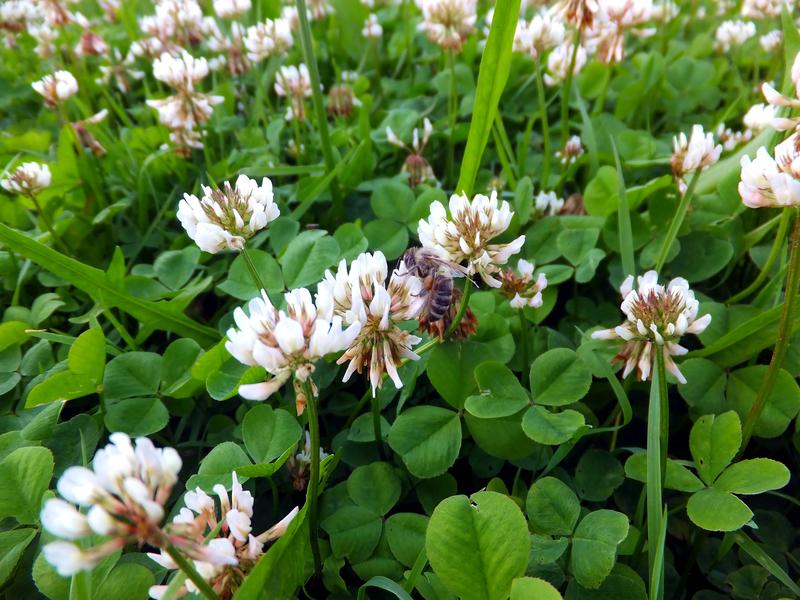
- Clover lawns will flower and this will attract bees – whilst beneficial for your garden, it is not great for walking barefoot. If you plan to walk barefoot or have allergies, you may need to mow your clover lawn when it flowers to prevent this.
- Pure clover lawns are suited best for low to moderate foot traffic, for higher traffic areas such as sporting fields, it is best to plant a mixed grass and clover lawn to make it more hard wearing.
- Dutch (white) clover will likely need to be reseeded every 2 to 3 years depending on your growing conditions
- Hot and drought conditions can cause pure clover lawns to brown and die back – making a mixed grass-clover lawn the best combination for warmer climates.
How to grow a clover lawn
For many of us keen on a well kept green, the best way to grow a clover lawn is to simply stop fighting it!
Mixed grass-clover lawns are often the best solution for high traffic areas, so simply stopping using anti-clover herbicides or weeding will allow your clover to flourish as a companion within your grass lawn.
Growing a clover lawn
Growing a clover lawn is dead simple and there isn’t much to it at all – you just need to pick up a packet of clover seed instead of grass seed! Clover lawns will typically grow well wherever a conventional grass lawn grows.
To encourage clover growth, you can simply mow your lawn very low, aerate the soil (spike the lawn) and then over-sow with your chosen clover seed and sand or fine soil – don’t bury the seeds too deeply or they will not sprout.
If you are starting from scratch, prepare the area as you would for a conventional grassed lawn; level the area and remove any large rocks, sticks or debris. Lay a coverage of sand (approximately a half inch), followed by good quality topsoil and then spread your clover seed, followed by an additional thin layering of sand or fine soil.
Clover prefers a fairly neutral but very slightly acidic soil pH range of between 5.8 to 7. If your soil is too alkaline (high pH), you could add some compost, manure, coffee grounds, peat moss, iron chelates or powdered sulphur to the top soil to lower the pH for optimum clover growing conditions.
Seed coverage rates to produce a dense lawn are approximately 5g per square meter – or for a fairly common sized 20 x 10m patch of lawn you will need just over a kilogram (two pound) of clover seed which will set you back around $30 to $40. Many retailers may quote a higher seeding rate purely because they want you to buy more seed, but 5g/sqm should be more than enough.
Simply then water generously each day for a few weeks to help the clover become established.
Maintaining a clover lawn
Clover lawns do not require high nitrogen fertilisers, since they are a leguminous plant and work together with bacteria to fix atmospheric nitrogen into the soil into a form that the plant can use.
Clover lawns will still benefit from being fed with Phosphorus (P) and Potassium (K) as well as trace minerals, so if you did want to give it a boost you could choose a good quality, low nitrogen (N) fertiliser.

Clover lawns can be mowed just like a conventional grass lawn, however they will not need to be mowed as frequently and you can expect to mow a clover lawn about half as often – once per fortnight or month depending on your environmental conditions
Summary of Growing a Clover Lawn
Clover lawns make a great and more sustainable alternative to traditional monoculture grass lawns. They are inexpensive to seed, are soft and feel great to walk on, stay lush in summer and require much less water and effort to maintain.
Clover lawns also provide nutrients to nearby plants by harnessing beneficial bacteria to help them fix nitrogen from the air into the soil, promote a thriving ecosystem in your garden by attracting a myriad beneficial insects and prevent weeds from growing due to their dense root structure and broad leaves.
In this regard, a clover lawn is an attractive permaculture solution for anyone’s outdoor system. Clover lawns are more environmentally friendly, sustainable and self-sufficient solution than a conventional grass lawn.


obviously like your web site but you have
to test the spelling on quite a few of your posts.
Several of them are rife with
spelling issues and I to find
it very bothersome to inform the reality then again I will certainly come back again.