Learn how companion planting will help you create a bountiful herb garden and find out the best herbs to plant together in your garden, based on their needs.
Introduction – Herbs to plant together
Herbs are a wonderful addition to any garden. Not only do they add flavor and fragrance to the garden, but they also have many beneficial properties. Herbs can be used for cooking, medicinal purposes, and aromatherapy.
When planting herbs, you will want to take into account the needs of the plants. Some herbs prefer full sun, while others prefer partial shade. Some herbs need a lot of water, while others do well in dry conditions.
It is important to plant herbs that have similar needs together. If you get such herbs that need different conditions, they will not thrive and may even die.
Another thing to consider when planting herbs is the size of the plants. Some herbs will get large and need plenty of room to grow, while others stay small. Be sure to plant small herbs in the front of the garden and large herbs in the back.
Now that we have talked about some of the things to consider when planting herbs, let’s discuss some of the most-asked questions.
What is Companion Planting?
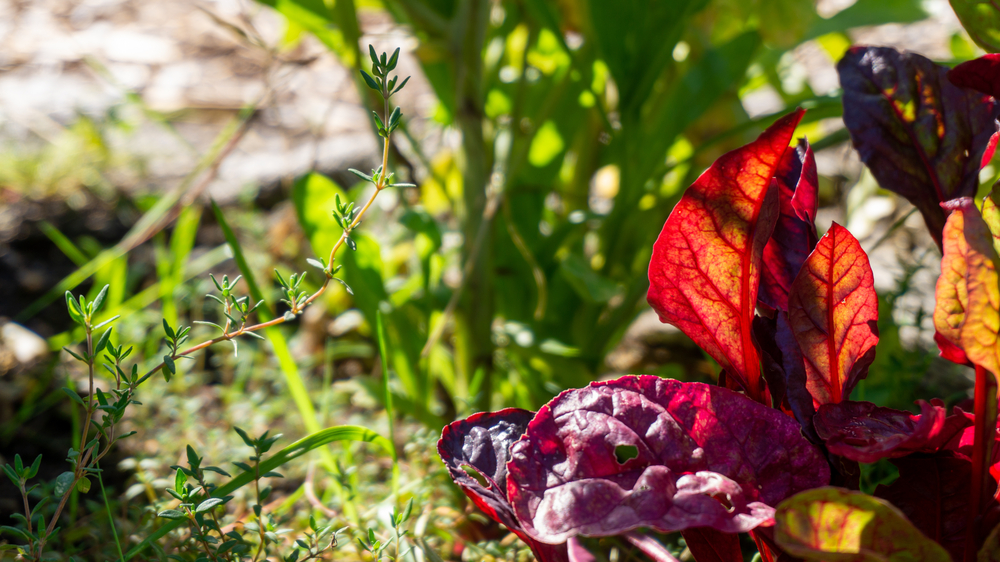
Companion planting is a gardening technique that involves planting different types of plants together to maximize their growth potential. The idea is that certain plants can help to improve the growth and health of other plants, while also providing some protection from pests and diseases.
For example, companion planting can attract beneficial insects, like ladybugs and bees, which help pollinate plants and control pests. Companion planting can also be used to deter harmful insects, like aphids and caterpillars, by planting companion plants that they don’t like nearby.
Finally, companion planting can also be used to improve soil quality by adding nutrients and organic matter. It is a simple yet effective way to get the most out of your garden.
To name a few, some popular companion planting herbs are:
● Basil and tomatoes: Basil improves the flavor of tomatoes, while tomatoes help to protect basil from pests.
● Parsley and carrots: Parsley improves the flavor of carrots, while carrots help to protect parsley from pests.
● Dill and cucumbers: Dill improves the flavor of cucumbers, while cucumbers help to protect dill from pests.
● Mint and cabbage: Mint improves the flavor of cabbage, while cabbage helps to protect mint from pests.
“Companion gardening refers to the planting of different crops next to each other for strategic reasons”
Naomi Duncan – ‘Companion planting’
How Close Together Can I Plant Herbs?
The answer to this question depends on the size of the herbs.
Herbs that stay small, like chives, tarragon, and parsley, can be planted as close as six inches apart (since they all like moist soil!). Herbs that grow large, like sage and rosemary, should be planted eighteen inches apart.
Also, basil and parsley require full sun and well-drained soil, making them ideal companions. Both mint and oregano enjoy the partial shade and moist conditions, so they can also be planted together.
When it comes to Mediterranean herbs; a blend of thyme, rosemary, and savory, you can actually plant all three herbs together in one pot.

Just make sure to give them plenty of room to spread out. So, the next time you’re at the nursery, think about which culinary or perennial herbs you’d like to grow together. You might be surprised at how well they complement each other.
Can You Plant Different Herbs in The Same Planter?
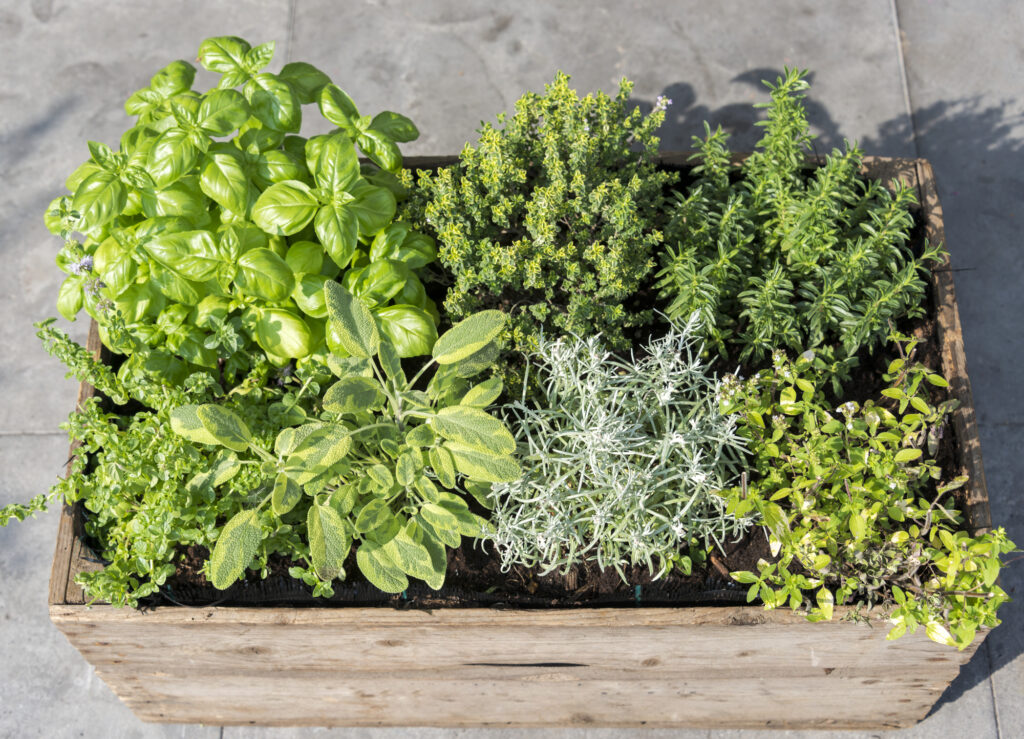
Yes, you can plant different herbs in the same planter.
But there are a few things to keep in mind.
First, different herbs have different root systems, so it’s important to choose a planter that is large enough to accommodate all of the roots.
Second, different herbs also have different water needs, so it’s important to water each plant individually.
Finally, some herbs can be aggressive growers, so it’s important to give them enough space to spread out. For example, basil needs full sun and regular watering, while parsley does well in partial shade and dry soil.
If you are planting different herbs in the same planter, it is a good idea to plant herbs that have similar needs together. This will ensure that they all get the nutrients and water they need to thrive.
You can also plant herbs in different colors together to create a beautiful planter display. Herbs like lavender, chamomile, and lemon balm make a lovely addition to any garden.
Do Herbs Need Full Sun?
Some gardeners swear by full sun exposure, while others claim that partial shade is best.
So, what’s the truth? The answer may depend on the type of herb you’re growing.
For example, basil and oregano are both sun-loving herbs that do best when they receive at least six hours of direct sunlight each day. On the other hand, cilantro and parsley are more tolerant of shady conditions and can even thrive in areas that receive as little as four hours of direct sunlight each day.
It is important to note that herbs that get full sun will produce more blooms and have a better flavor than those that don’t. So, if you want to get the most out of your herbs, make sure to plant them in a spot that gets plenty of sun.
Herbs to Plant Together – Best Combinations?
Many herbs grow well together, and makes for a great sustainable garden. Here are some of our favorites:
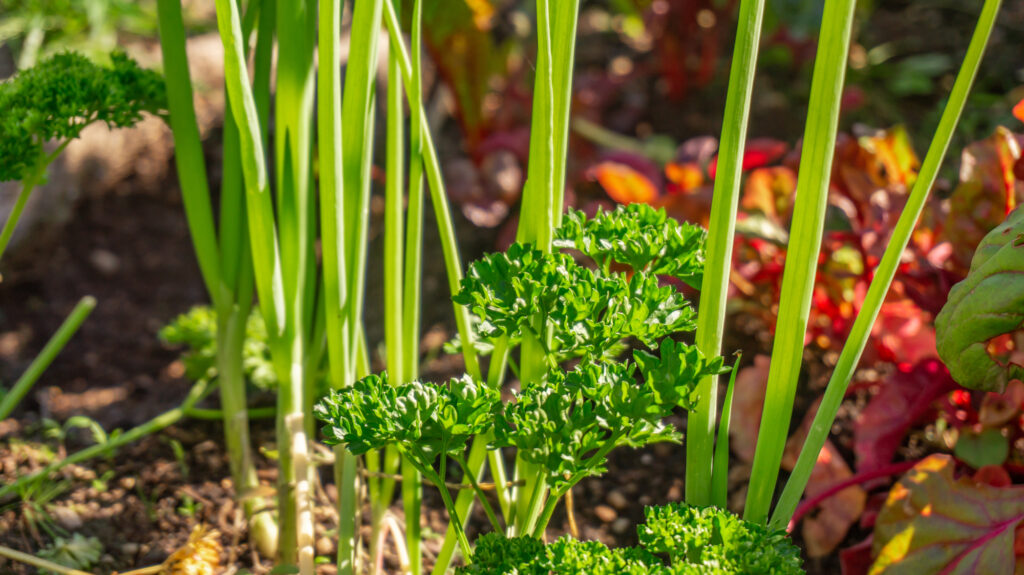
1. Chives and parsley make a great pair. Chives help to repel pests like aphids, while parsley adds flavor to dishes. They are also moisture-loving herbs!
2. Mint and lavender are two of the most popular herbs for aromatherapy. They both grow well in partial shade and can be planted together in a pot.
3. Thyme, rosemary, and savory are the perfect trio for the Mediterranean garden. They all like dry soil and can be planted together in one pot.
4. Lemon balm and chamomile are two of the most popular herbs for tea. They both grow well in full sun and can be planted together in a pot.
5. Basil and oregano make a great team. Basil helps to repel aphids and other harmful insects, while oregano provides a barrier against weeds.
6. Rosemary and sage are another good pair. Rosemary acts as a natural insecticide, while sage protects against fungal diseases.
7. Lemon verbena and lemon thyme are two of the most aromatic herbs you can grow together. Their delicate, citrusy scents are sure to please the senses, and they make a great addition to any kitchen garden. Both lemon verbena and lemon thyme have culinary and medicinal uses. Lemon verbena can be used to flavor tea, while lemon thyme is a great addition to soups and stews. Medicinally, both herbs can be used to soothe stomach upset and relieve respiratory congestion.
8. If you plant a lemon mint with spearmint, you’ll get a refreshing, zesty flavor that’s perfect for summertime. The two herbs work well together, and the lemon mint will add a bit of brightness to the mix. Both herbs need full sun and well-drained soil to thrive. Water them regularly, and trim them back as needed to keep them from getting too leggy.
There are many other herbs to plant together and the combinations are endless. So, get planting!
Which Herbs Cannot Be Planted Together?
If you’re looking to add some flavor to your cooking, herbs are a great way to do it. But if you’re new to herb gardening, you might be wondering which herbs can’t be planted together. Here are a few examples:
1. Fennel can impact the flavor of other herbs in your garden so it’s best that fennel grows on its own
2. Garlic, shallots and onions probably shouldn’t be planted next to legumes like beans and peas as they can stunt their growth
3. Basil and sage have similar growing requirements, but they can compete for space and nutrients. While they can be planted close together, it’s best to give them each their own space.
4 . Sage can restrict the growth of cucumbers and onions so its best to keep it away from them
5 . Rosemary should also stay clear of cucumbers as it can release a chemical that hinders the growth of the cucumber plant.
“You’re not a real gardener until you’ve killed at least a hundred plants.”
Mike McGrath
Do Herbs Grow Better in Pots or Ground?
For many gardeners, the debate over whether to grow herbs in pots or on the ground is a matter of personal preference.
However, there are a few considerations that can help you make the best decision for your garden.
If you live in an area with harsh winters, then growing your herbs in pots is a good way to protect them from the cold. Potted plants can also be moved indoors if necessary.
On the other hand, if you have ample space in your garden, then planting herbs in the ground may be the better option. This allows the roots to spread out and helps to encourage healthy growth. A good mulch is also a strong addition to your pots to keep the soil moist underneath.
Ultimately, whether you choose to grow herbs in pots or on the ground is up to you. With a little experimentation, you’ll figure out what works best for your herb garden.
Summary – Herbs to plant together
There are many different types of herbs, each with their own unique flavor and use. Be mindful when planning your herb or veggie garden to maximise their growth and minimise the risk of failing to thrive or pests taking over. Learning a little bit about companion planting can mean the difference between a successful garden and one where plants are suffering.
Herbs can be grown successfully in pots or in the ground but just ensure they are getting the full sun they require and plenty of watering.
Have you tried planting particular herbs together? How have you designed your garden? What worked or didn’t work for you?