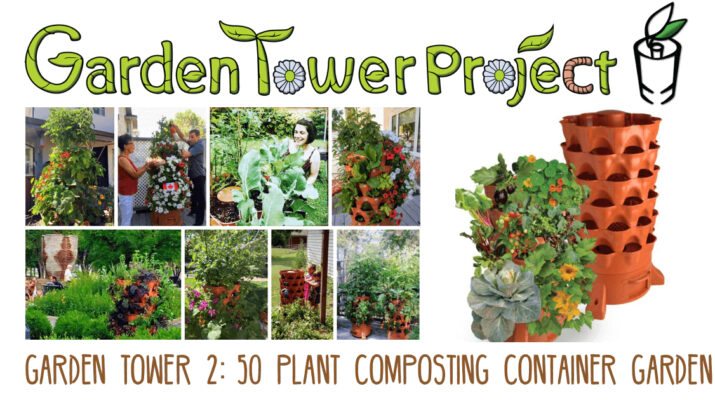
In this article, we will discuss the innovative vertical garden unit – the Garden Tower Project. Find out what it is, how it works, and what it can do for you.
Introduction
The Garden Tower Project is a revolutionary gardening invention that allows you to grow up to 50 plants in a small amount of space. It is made out of recycled plastic and provides a self-sustaining ecosystem. It uses very little water and no fertilizers. The tower holds up to 50 plants and can be used indoors or outdoors.
As a collaborative effort of inventor Colin Cudmore, environmental scientist Joel Grant, and health professional Thomas Tlusty, this brilliant creation was designed to make vegetable gardening accessible for everyone.
They wanted to address the issue of food security by offering an effortless and efficient way to grow fresh, healthy food without using chemicals or pesticides. And they finally succeeded when they delivered their first Garden Tower in 2012.
In this article, we will answer some of the most commonly asked questions regarding this marvelous gardening ecosystem.
What Is The Garden Tower Project?
An innovative new way to grow your food at home. It is a 43” tall vertical planter capable of growing up to 50 plants in a 4 square feet area. With its self-contained composting chamber, you can now turn your organic waste into organic fertilizer for your plants.
It is essentially a mini-ecosystem, with the plants working together to recycle kitchen scraps and other organic matter into nutrient-rich compost. The compost then acts as a natural fertilizer, providing essential nutrients to the plants.
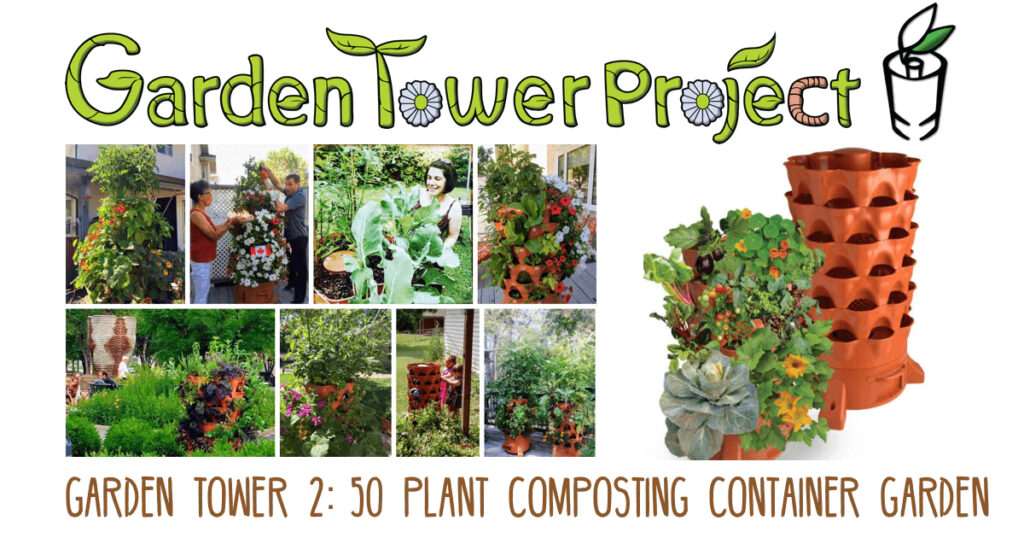
It’s an innovative new way to grow your food at home..
How Does The Garden Tower Project Work?
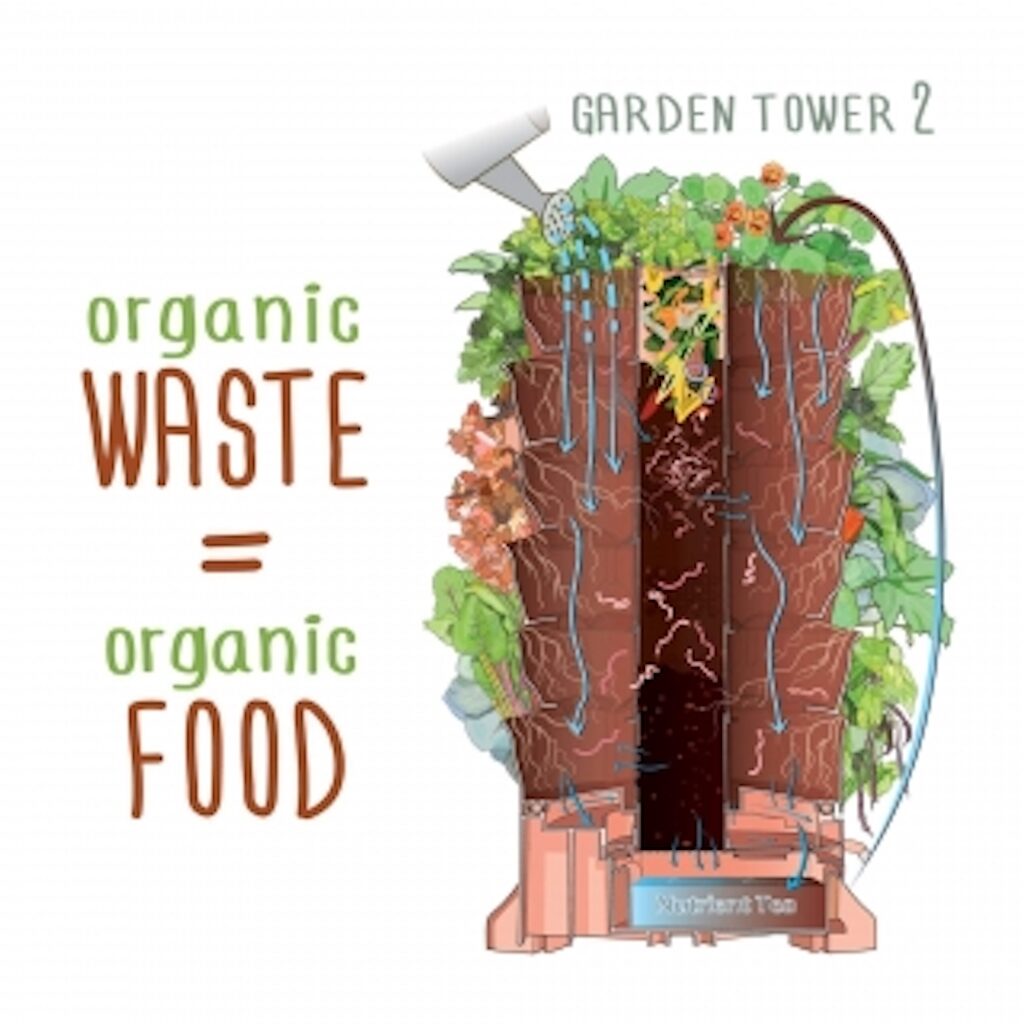
A garden tower is a self-contained unit that utilizes vertical space to grow plants. It consists of a number of shelves that are stacked on top of each other, with each shelf containing a number of planting pockets.
These planting pockets are attached to a central vermicompost column that recycles your kitchen scraps into organic fertilizer for your herbs, vegetables, and greens. How does it work? The composting chamber relies on the moisture and temperature from the surrounding soil for a sustainable worm habitat.
Now let’s talk about how plants receive nutrients from compost. There are three ways nutrients move through a Garden Tower… water, worms, and roots.
● Water… Every time the soil is watered, nutrients are moved from the root zone to the leaves for increased absorption.
● Worms… Worms travel from compost to soil in planting holes and leave behind nutrient deposits.
● Roots… Holes in the vermicompost allow roots to reach the compost within a week and absorb nutrition.
Most importantly, this three-fold nutrition-absorb design eliminates the nutrient loss associated with typical gardening containers.
Lastly, the removable drawer at its bottom collects nutritionally dense compost tea that can be poured in the soil for maximum growth of plants. Just dump soil, kitchen waste, and worms in the column and let the Garden Tower take care of the rest.

A garden tower is a self-contained unit that utilizes vertical space to grow plants.
What Plants Can You Grow In A Garden Tower Project?
You can grow a variety of plants in a garden tower; herbs, vegetables, flowers, even small fruits and berries, and other plants. The general rule of thumb is that anything that grows above the ground can be planted in a Garden Tower.
If you need some ideas to get started, refer to our list for inspiration:
Vegetables
● All kinds of leafy green vegetables… Spinach, Bok Choy, Kale, Lettuce Arugula
● Plants that spread out… tomatoes, peppers, peas, zucchini, cucumbers, eggplants, and beans.
● Cruciferous vegetables… cabbage, broccoli, brussel sprouts, and cauliflower
● Microgreens… mustard greens, wheat grass, etc.
Herbs
Herbs thrive in a vertical gardening ecosystem, so there is no limit to the types of herbs you can grow. Just throw in the seeds and you will always have fresh basil for your pesto, rosemary for roasts, lavender for tea, or chives for eggs.
Flowering Plants
Be it edible flowers such as calendula, marigolds, and nasturtiums or ornamentals like morning glory, aster, or bells of Ireland, these gardening towers are suitable for growing a wide variety of flowering plants.
Are There Different Types Of Garden Towers?
No, garden towers do not have different types per se. However, you can confuse Garden Tower 2 (GT2) with its predecessor Garden Tower 1.1 that was launched in 2012. Later in 2014, the company halted the production of their first model and launched an upgraded version, GT2 in signature terracotta color with improved vermicompost, 360 degrees rotation, 100% recycled plastic, etc.

You can grow a variety of plants in a garden tower; herbs, vegetables, flowers, even small fruits and berries.
Who Is A Garden Tower Suited To?
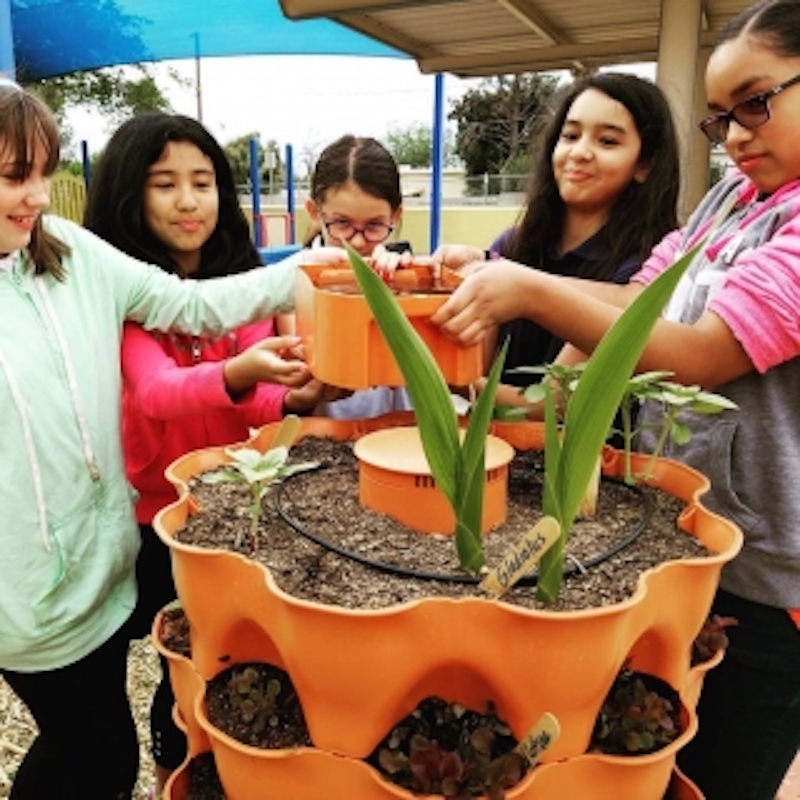
A garden tower is a great option for anyone looking to have fresh and organic produce at their fingertips, but who may not have a lot of space or easy access to soil. They are especially well-suited to urban dwellers, community gardens, and beginner gardens.
Garden towers are very efficient in the use of space, and can make gardening much easier for those who want to start their own gardens. They can also be a great addition to an already existing garden.
With minimal effort, you can grow a wide variety of plants and vegetables in a Garden Tower, making it the perfect solution for those with limited time or gardening experience.
“I absolutely love my garden tower and I think every family should have one. I have never seen herbs and vegetables grow faster then they do in the garden tower, it is amazing!”
mary wheeler
What Are The Benefits Of A Garden Tower Project?
Garden towers are an increasingly popular type of vertical garden that can bring a touch of greenery to even the smallest of spaces. They offer a number of benefits, including:
● Can recycle up to 50% of a household’s food waste, with the composting system
● Capable of growing 50 plants in a 4 sq. ft. area.
● Eliminates the need for separate composting bins or digging up pits.
● Reduced water usage
● Made from 100% recycled, food-touch grade plastic
● Helps reduce your eco footprint
● Made of UV-protected plastic
● 360 degrees rotation for maximum sun exposure
● Customizable heights as planting trays are stacked on top of each other.
● Portable, so you can place it anywhere in your garden
● Ideal for hanging plants
● Costs less than hydroponic farming
A garden tower is a great option for anyone looking to have fresh and organic produce at their fingertips, but who may not have a lot of space or easy access to soil.
Are There Any Drawbacks To A Garden Tower?
If you’re considering starting a garden, you might be wondering if a garden tower is the right choice for you. While there are many benefits to using a garden tower, there are also some potential drawbacks that you should be aware of.
For example, garden towers are not typically suitable for root crops, such as potatoes and carrots. Additionally, most fruit trees will not grow well in a garden tower; however, certain berries and shrubs can be successfully grown in this type of environment.
Another thing to keep in mind is that composting material in a garden tower might attract pests, such as rats or snakes. All that being said, a garden tower can still be a great way to grow a variety of plants in a small space – just be sure to do your research first!
How Much Does The Garden Tower Cost?
As per their website, the cost of one Garden Tower is USD$499 but every now and then, there will be sales and discounts. Additionally, the caster wheel kit (for moving and supporting the structure) cost USD$109.
You can also buy extensions, soil mix, seeds, and plant food from their website. Alternatively, you can also look into their growing bundles, which include a Garden Tower paired with an array of add-ons.
As per their website, the cost of one Garden Tower is USD$499 but every now and then, there will be sales and discounts.
Where Can You Buy The Garden Tower?
You can buy it from the official website of Garden Tower Project to ensure quality and quick delivery.
What Information Can You Find On The Garden Tower Website?
Garden Tower’s website provides potential customers with a wealth of information about the company and its products. Visitors to the site can learn about the different features of the Garden Tower, as well as read testimonials from satisfied customers.
The site also includes a helpful FAQ section that addresses some of the most commonly asked questions about the product. Whether you are looking for tips on planting and growing vegetables, or you need help troubleshooting a problem, it has all the resources you need.
The site also features a learning center where experts share their knowledge on a variety of gardening topics related to indoor gardening or composting.
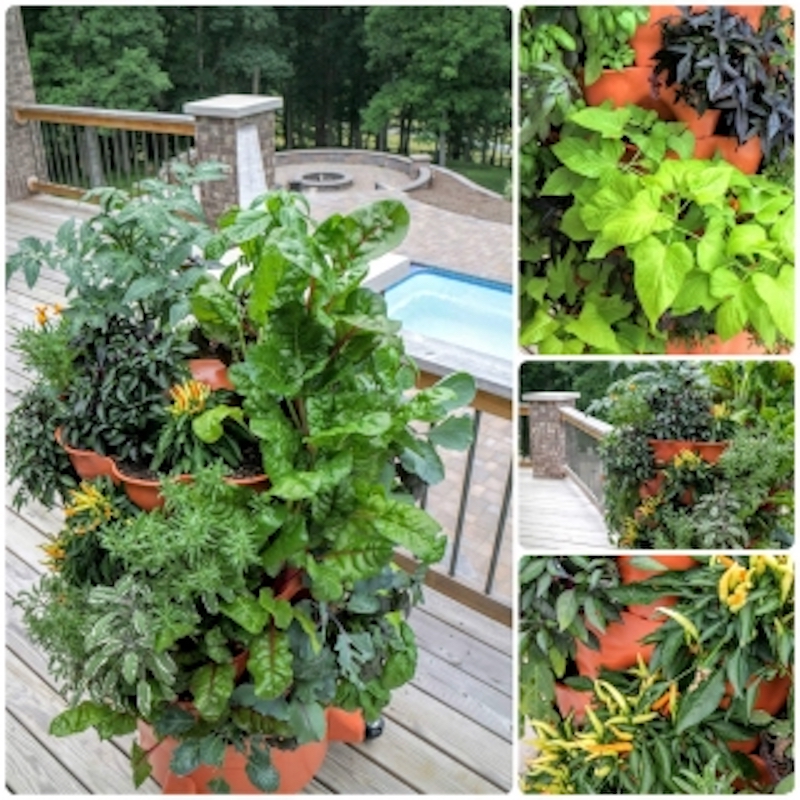
Photo credit: The Garden Project
Is A Garden Tower Worth It?
When you consider the numerous benefits of composting and how having a garden tower makes it easier and accessible for gardeners to compost regardless of the size of their garden, it really makes them worth the investment.

The price may be a deterrent for some, but they offer an eco-friendly way to garden by reducing your reliance on chemical fertilizers and pesticides. Not to mention, they provide an innovative approach to indoor gardening by growing a large number of plants in a small space.
In short, they offer great value for money in terms of reduced grocery bills, less food waste, and healthy organic produce.
” The garden tower was a beacon of light, totally astonishing. No weeds, no bugs, what’s not to love?”
Ann Kreilkamp
Conclusion
Due to the increase in global population and urbanization, it is now inevitable to fulfill the world’s food demands through organic agricultural techniques. The only solution to this problem is to inspire individuals to grow their own food. That is exactly the idea behind the creation of the vertical Garden Tower.
Moreover, it makes vegetable gardening convenient for the masses by offering them an excellent way to recycle food scraps and produce their own organic food. That’s not all, it can also be used to teach children about gardening and healthy eating.
The Garden Tower Project has the potential to revolutionize home gardening, and we are excited to see how it develops over time.